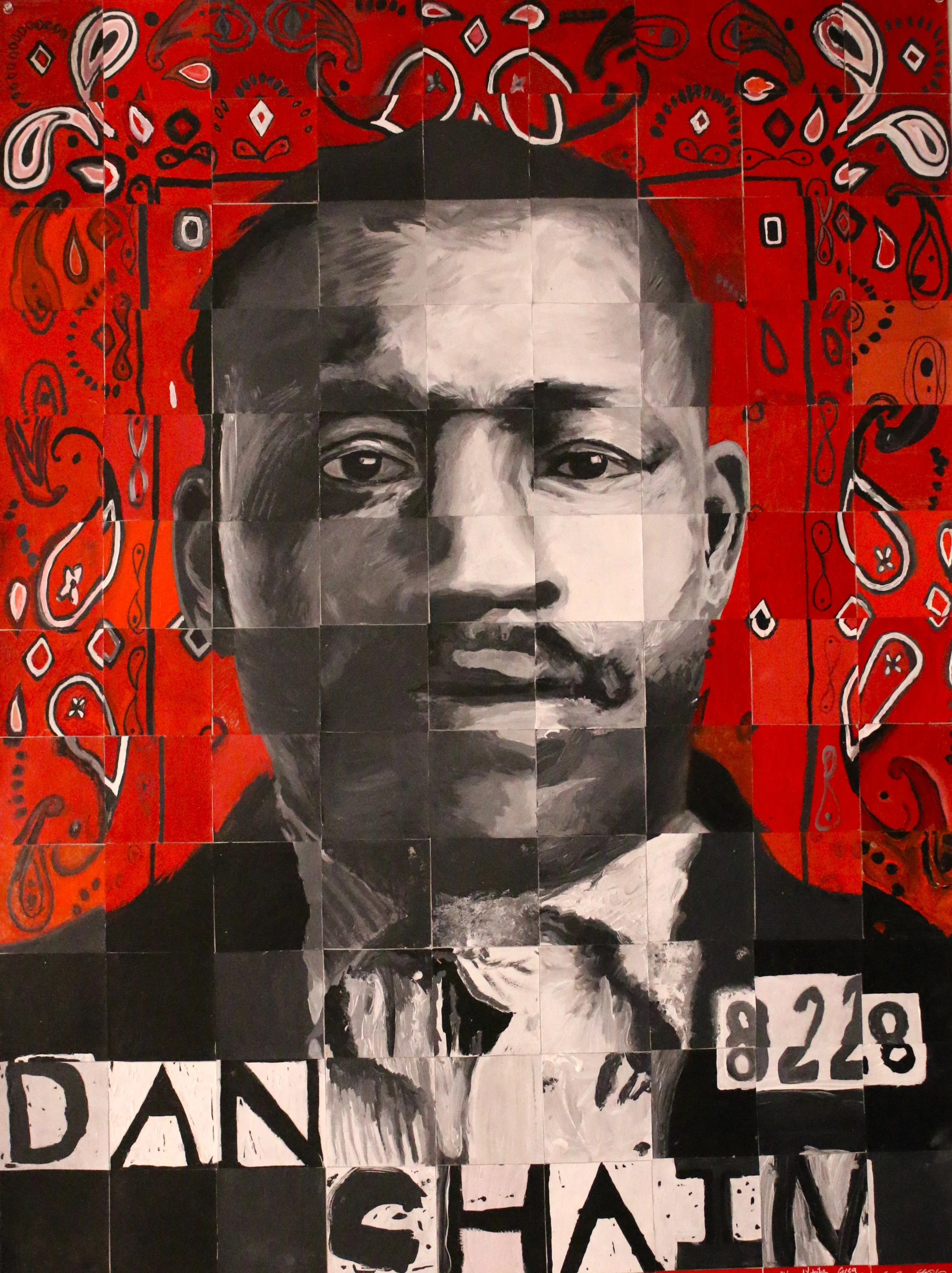
Dan “Few Clothes” Chain was a Black labor organizer who worked alongside Fred Mooney and Lawrence “Peggy” Dwyer during the Paint Creek-Cabin Creek strike of 1912–1913. He was one of a group of men known as the “Dirty Eleven,” who resisted the coal companies’ efforts to break the strike. The West Virginia Mine Wars Museum describes Chain as an expert with a gun and a man with fists “the size of picnic hams.” He was clearly not someone the coal companies or the authorities were eager to have organizing miners.
Chain was arrested during the strike and sentenced to five years in prison by a military commission. His case was later examined during U.S. Senate hearings, where questions were raised about both the severity of his sentence and the fact that he had never been given a trial by jury. One senator said the offense he was accused of committing should have carried a sentence of no more than 90 days.
Governor William E. Glasscock granted Chain a conditional pardon in January 1913, but he was arrested again just sixteen days later. He was eventually pardoned a second time by Governor Henry Hatfield in May. Of the twelve men arrested in connection with the strike, Chain was the last to be released. And then, Dan Chain largely disappeared from the historical record.The only known surviving photo of him is his mugshot.
Black miners and organizers were an important part of the labor movement in southern West Virginia, alongside miners from a wide range of European backgrounds. Black miners made up a significant part of the region's workforce. By 1920, roughly one in four miners in Mingo County was Black. Mining companies often relied on differences of race, ethnicity, and language to keep workers divided, but the movement to organize crossed those lines. That solidarity was an important part of the labor movement's strength.